An engineer submits a permit set with minimal structural detail because the design is "straightforward." The plan reviewer kicks it back, and the project sits in permitting for three months.
Different role. Same mistake.
A spec writer starts writing full three-part specifications during schematic design when all that was needed was an outline spec. Half that work gets thrown out when the owner's budget shifts.
It happens on the other side of the table too.
A contractor sends a vague two-line RFI, and the architect sends back a three-page response covering every possible interpretation. One asked too little. The other answered too much.
And it goes both ways.
A client hands over a 30-page program wish list with zero budget parameters, then rejects three concept schemes because they all exceed a number the team was never given. Too much wishful detail, not enough reality.
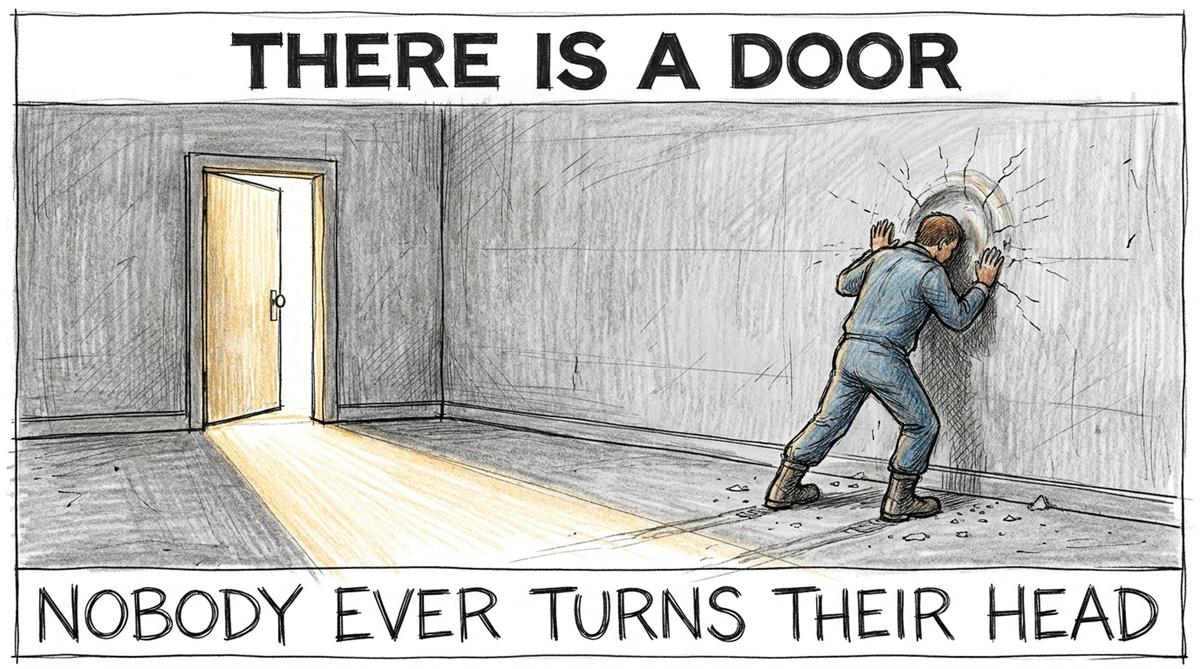
Every one of these is the same problem.
The information itself wasn't wrong. The calibration was just off.
You tell a doctor your knee hurts and they launch into joint biomechanics, cartilage degeneration, and surgical options.
You just wanted to know if you should ice it or use heat.
This isn't a construction problem. It's a communication problem.
What "Right Level of Detail" Actually Means
It's matching the depth and type of information, to the person receiving it, the phase of the project, and the decision that needs to be made right now.
This isn't about dumbing things down or holding information back. It's about reading the moment.
Too much detail overwhelms and stalls decisions.
Too little detail creates assumptions and gaps.
Both cost money and time.
Every deliverable, every meeting, every email should be guided by one question:
"What does this person need from me right now to make the next decision?"
That question applies to specs, RFIs, presentations, proposals, submittals, and the 47 emails you send before lunch.
If you're not asking it, you're guessing. And guessing is how calibration goes wrong.
Why Years of Experience Doesn't Fix This
You can show up at the gym every day for 20 years and still be out of shape. Showing up every day isn't the same as knowing what you're doing.
You need a program, not just a routine.
The same is true in the AECO industry.
Experience teaches you that something needs to happen. It doesn't always teach you what, when, or how much.
Most of us learned calibration through trial and error.
We overshared on a proposal and got ignored.
We underprepared for a permit review and lost three months.
We slowly figured it out, but the tuition was paid in lost projects, damaged relationships, and wasted effort.
The feedback loop is slow and often invisible.
You don't always know how you miscalibrated.
The client who didn't hire you doesn't call to explain why.
The product rep who never got a second meeting doesn't know what went wrong.
You just keep doing what you've been doing, assuming it's working, because nobody told you it wasn't.
There's a better path: structured education that teaches you the framework before you have to learn it the hard way.
This Is Exactly What CSI Certifications Have Always Done
I've had several CSI certifications for years, and the thing that surprised me most wasn't the technical content.
It was how much they changed the way I communicate on projects.
CSI’s certifications provide structured education in how information flows across a project.
They teach you the framework that experience alone takes decades to develop, and even then only partially.
CDT® is the macro roadmap.
You can't calibrate what someone needs until you understand how project delivery works.
CDT teaches you the phases, the players, the documents, and the decision points.
Once you see the full arc, you understand where your role fits and what the people around you need at each moment.
Learn more about the CDT certification.
CCPR® is the filter.
It teaches product reps the difference between handing over a cut sheet and handing over a technical binder.
When to present and when to listen.
How to move from being another salesperson to being a trusted technical advisor by calibrating your involvement to each phase of the project.
I've written about what separates great product reps from the rest, and it comes down to exactly this.
Learn more about the CCPR certification.
CCCA® is noise control during construction.
Submittals, RFIs, change orders, field observations: construction administration is a constant stream of information that needs to be managed without burying the field in friction or exposing the team to risk.
CCCA teaches you how to control that flow, clear the bottlenecks, and keep the project moving forward without exposing the team to risk.
Learn more about the CCCA certification.
CCS® is document economy.
It teaches you how to write the exact level of specification required for the phase.
When an outline spec is appropriate.
When a full three-part spec is necessary.
How to organize documentation so the people who need it can actually find it and use it.
The Payoff of Getting This Right
The product rep, this time, asks: "What phase are you in, and what decision are you trying to make today?" Then delivers a one-page performance summary with the test data that matters for this specific application. Gets a second meeting. Then a third. Then becomes the rep the design team calls first.
The spec writer, this time, delivers a clean two-page outline spec identifying products and performance criteria. When the owner's budget shifts two weeks later, the outline adapts in an afternoon instead of a week. No wasted effort. Just the right document at the right time.
The contractor, this time, writes: "At grid line 7, sheet A-501 calls for Detail 3 at the head, but sheet A-504 shows Detail 7. Which detail governs?" The architect responds in one sentence. Issue resolved same day.
In an industry full of people who are technically competent, the ones who can match their output to the moment are the ones who stand out. Not because they know more. Because they communicate better.
That's what CSI certification holders bring to a project. Not just knowledge, but the judgment to deploy it at the right time and at the right level of detail.
If you found this article helpful, check out my other posts on the CSI blog:
About the author
Michael Riscica is a registered architect in Florida and Oregon and founder of Young Architect Academy, a platform that has helped thousands become registered architects and earn their CSI certifications.
As a registered architect who has worked on all sides of the industry as an architect, owner's representative, and contractor, he brings a multi-perspective understanding of how communication makes or breaks a project.
Want to learn more about CSI certifications?